















Google has officially entered the laptop arena with the launch of the Googlebook, promising a seamless transition for Android users looking to ditch Windows or macOS. On paper, the value proposition is enticing, and in practice, the physical machines delivered by partners like HP, Dell, and Lenovo are impressive, ranging from great to truly excellent. However, beneath the sleek chassis lies a software experience that feels prematurely released. For those putting these devices through their paces, the initial excitement has quickly devolved into a series of frustrations and bewilderment.
The primary struggle stems from an operating system that feels like a step backward from ChromeOS rather than an evolution. Users are reporting basic missing features that one would expect on day one, such as the inability to swipe between active desktops or manage multiple Google accounts within Chrome. Many tasks remain cumbersome; sending a message in Signal requires awkward keyboard shortcuts, and certain system functions feel ported directly from a smartphone without consideration for a desktop environment. Most glaringly, a clear all button persists in the interface that kills every open application at once—a feature useful on a phone but chaotic on a productivity machine.
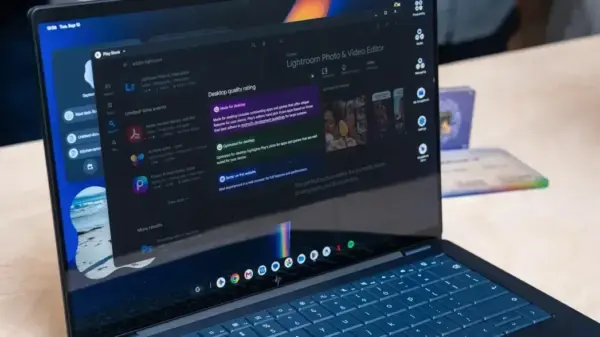
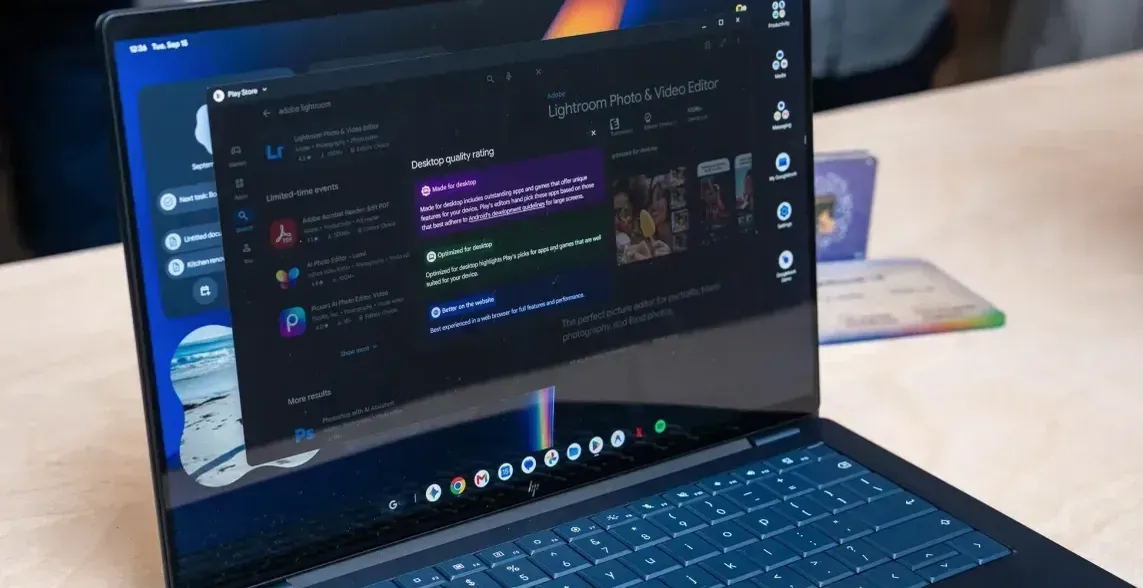
Beyond the core OS glitches, there is a profound disconnect between the hardware and the available applications. While Android is mature across various screens, most apps still behave like oversized tablet programs. Streaming services often force themselves into full-screen modes that ignore keyboard inputs entirely, meaning users cannot simply hit the space bar to pause a video. Even high end creative tools like Photoshop and Lightroom feel like stripped down mobile versions that pale in comparison to their desktop counterparts. This creates an unsettling sensation that the Googlebook is merely an Android tablet pretending to be a computer.
Ultimately, while the vision of a unified ecosystem connecting phones and laptops is compelling, current testers feel more like unpaid beta researchers than consumers. From erratic Linux app integration to inconsistent window scaling across Google’s own suite of tools, the software lacks the polish required for professional use. Unless Google can push its development cycle into overdrive and convince third party developers to optimize for larger screens, these beautifully crafted laptops risk becoming expensive monuments to an unfinished idea.