


















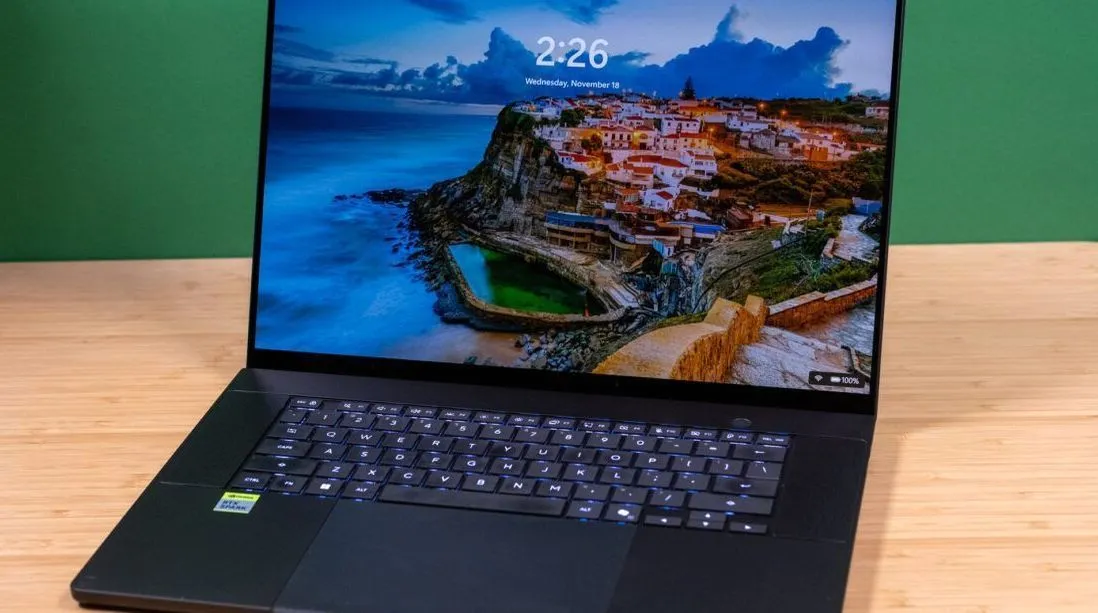
For years, the promise of AI in laptops has mostly felt like clever marketing designed to move old inventory. However, the arrival of the Asus ProArt P16 suggests we are finally moving past the hype. By integrating Nvidia’s new RTX Spark chip and providing a massive 128GB of unified memory, Asus has created a machine capable of running complex AI models locally rather than relying on distant cloud servers. It is effectively a portable workstation that allows users to deploy sophisticated AI agents without worrying about subscription tokens or data privacy concerns.
Under the hood, the P16 is a technical marvel featuring a 20-core Grace CPU and a Blackwell GPU that delivers immense computational power. Because it uses a unified memory architecture, the system can dynamically allocate its vast RAM between general tasks and AI workloads. This enables the laptop to handle models with over 100 billion parameters, far exceeding what typical gaming laptops can manage. While this capability comes with a steep price tag reaching up to seven thousand dollars, it transforms the device from a simple tool into a legitimate hub for local artificial intelligence development.
Beyond its silicon brains, the ProArt P16 functions as a premium piece of hardware. It features a stunning 16 inch OLED display with incredible peak brightness and an expansive haptic trackpad that rivals those found on high end MacBooks. The build quality is solid and industrial, though the sleek matte finish tends to attract fingerprints during heavy use. Connectivity is equally impressive, offering an array of ports including USB4 and an SD card reader, ensuring creators aren’t tethered to dongles throughout their workday.
Despite these strengths, early adopters should be prepared for some friction. Running local AI remains an exercise in trial and error, and because it operates within Windows 11, there is slight overhead compared to dedicated Linux workstations. Battery life varies wildly depending on whether you are browsing the web or pushing the processor to its limits with deep learning tasks. Nevertheless, for professionals who need extreme mobility combined with cutting edge compute power, the ProArt P16 represents a significant leap toward a future where our machines think independently of the internet.