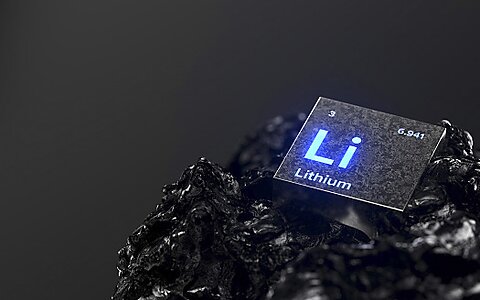


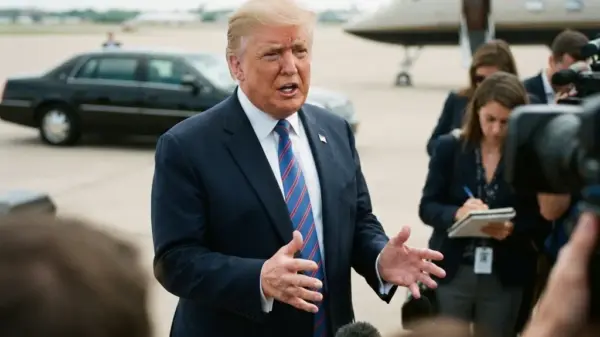










According to a stunning but unsurprising report from Reuters late Friday, embattled Commerce Secretary Howard Lutnick tried to coerce a private battery startup, Pure Lithium, into giving the government a 51 percent controlling stake in the company back in July. The company countered with an offer of 9.9 percent, but Commerce was “fixed on 51%,” the company’s lawyers wrote in an August memo obtained by Reuters.
Lutnick apparently proposed using $1 billion from Japan’s similarly coerced pledge to invest in the US to build a battery factory. A separate entity controlled by Washington and Tokyo would own the factory. But none of that $1 billion would actually go to Pure Lithium; instead, the company would operate it for a share of the revenue left after debt payments. Pure Lithium rightly balked at giving Washington control of its entire business in exchange for Commerce arranging factory financing.
Government Control for Government Control’s Sake
Lutnick reportedly told Pure Lithium CEO Emilie Bodoin that the government needed control of her company so the Pentagon and other federal agencies could use its batteries and asked for 100 batteries for the Defense and Energy departments to test. The company, which says its promising technology can create batteries with a China-free supply chain, was already in “active discussions” with potential partners, including defense and drone companies.
So why would the government need to own the company? If the government tests the batteries and they work, it can figure out what it needs and let battery manufacturers compete to provide them. And if financing is needed to scale up production—and the private sector truly, absolutely, and beyond any shadow of a doubt cannot provide the capital—then the federal government already has long-standing alternatives to ownership to assist.
Scrolling through the company timelines on Cato’s government ownership dashboard shows that most had already won federal contracts or secured financial assistance before the second Trump administration embarked on its equity spree. The administration wants the public to believe it’s taking a novel approach to shoring up critical supply chains. In reality, Trump just wanted his own federal equity portfolio, with Lutnick eagerly playing the role of chief dealmaker.
Coerced Trade Deals as a Back Door to Ownership
The $1 billion—a curiously large and precise figure—would have reportedly come from Japan’s pledged $550 billion in US investment in exchange for the Trump administration agreeing to a 15 percent tariff on most Japanese imports, down from the 25 percent it had threatened. Under the deal’s memorandum of understanding between the two countries, a committee chaired by Lutnick recommends projects, and Trump selects them. But Congress never approved the trade deal, and Japan told the World Trade Organization that neither country had undertaken a binding legal obligation. Either country could walk away from it, and Japan can also decline to finance a project. Trump can threaten higher tariffs, but Tokyo knows his presidency ends in January 2029.
As I’ve explained, these trade deals were motivated by the president’s desire to acquire large pots of money to spend without Congress’s approval.
(See Cato’s Restoring Free Enterprise essay on “Friendfunding” Industrial Policy for more on these trade deals).
Legal Uncertainty
Reuters says that “It is not illegal for the federal government to acquire equity stakes in a private company” and notes that the administration has often cited the 2022 CHIPS Act as a statutory justification. Commerce was behind deals involving 27 of the 41 companies on Cato’s dashboard. The CHIPS Act contains no express authority for Commerce to take stock in the companies it funds. In any event, Lutnick proposed using Japan’s investment pledge to finance the factory.
Which statute would have authorized Commerce Secretary Lutnick to take a controlling stake in Pure Lithium? The investment memorandum with Japan provides no independent legal authority for Commerce to acquire that stake. Reuters didn’t identify a law, and Commerce didn’t respond to questions.
Cronyism and Government Favoritism
Reuters says Pure Lithium CEO Bodoin’s initial July meeting with Lutnick was supposed to be about the company’s lawsuit against Panasonic’s US subsidiary for allegedly reverse-engineering its battery technology. Lutnick reportedly used the legal dispute to suggest that government ownership could help the company’s case. What’s notable is that it was one of Pure Lithium’s largest shareholders, Robert Friedland, who arranged the meeting (and attended). A month earlier, Commerce had announced a $250 million CHIPS research award to I‑Pulse, a company that Friedland cofounded.
It’s not the first time an administration equity deal came with a strong whiff of cronyism. Nor is Lutnick a stranger to such accusations.
While this deal fortunately fell through, it’s a reminder that a fundamental problem with government ownership is that it favors particular companies at the expense of others. In this case, competing battery makers would have faced a government-owned rival when bidding for federal contracts. And this administration hasn’t been shy about helping companies it favors and punishing those it disfavors. As my colleague Scott Lincicome documented, Trump and Lutnick reportedly leaned on Tim Cook (then Apple’s CEO) to have Intel manufacture some of Apple’s chips while Cook was seeking tariff relief in the summer of 2025. The following June, with the government by then an Intel shareholder, Trump publicly claimed credit for bringing the two companies together.
Capital Distortion
The administration and proponents of government ownership argue that equity can “crowd in” private capital for the company. Yes, private investors know that when the government decides a winner, government support can help mitigate downside investment risk. That may be good for the chosen company (at least initially), but that advantage can steer private investment away from competing companies. When investment flows become driven more by political considerations and less by fundamental business considerations, the result is misallocated resources and less competitive markets.
Pure Lithium’s lawyers worried that government ownership would make it harder for the company to raise private money, according to Reuters:
Pure Lithium rejected Lutnick’s requests, citing the lack of funds in the proposal for the company and expected public scrutiny, saying such an arrangement would “cripple Pure Lithium’s ability to raise capital or pursue an IPO,” according to the memorandum written by Pure Lithium’s counsel Skadden Arps, which objected because Pure Lithium would not have control of the proposed manufacturing plant.
Fortunately for Pure Lithium, it could just walk away. Other companies may have more to lose by turning down the administration, though. Bloomberg reported that the administration asked for—and received—a stake in Trilogy Metals in exchange for approving the access road the company needed for its Alaska mining operation. Intel’s equity agreement made issuing shares and warrants to Commerce a condition for receiving funds the government had previously awarded.
Cato’s Government Ownership Dashboard currently lists 41 companies in which the Trump administration has acquired, or announced a deal to acquire, ownership. Pure Lithium isn’t on the list because it wisely turned down Lutnick’s demand. The public learned about it months later because Reuters obtained the company’s correspondence and its lawyer’s memo.
As Scott Lincicome asked, how many other deals like this has the administration tried to make?