




















The federal government has given SpaceX a green light that could fundamentally alter the appearance of the night sky and the chemistry of our atmosphere. In a move reflecting a shift toward lighter environmental oversight under the Trump administration, the Federal Communications Commission has approved plans for Starmind, a massive network of one million artificial intelligence data center satellites. By moving heavy computing tasks off planet Earth and into solar powered orbital hubs, Elon Musk aims to solve the resource drain associated with terrestrial data centers, though critics argue he is simply trading one set of environmental problems for another.
Astronomers warn that the sheer scale of this project would dwarf existing constellations like Starlink. To maintain such a fleet, SpaceX would need to launch and subsequently decommission roughly 500 satellites every single day. This creates a daunting logistical cycle where tons of aluminum, titanium, and lead would regularly burn up upon reentry. Experts are particularly concerned about alumina deposits in the upper atmosphere, which could potentially deplete the ozone layer and increase the amount of harmful ultraviolet radiation reaching the ground.
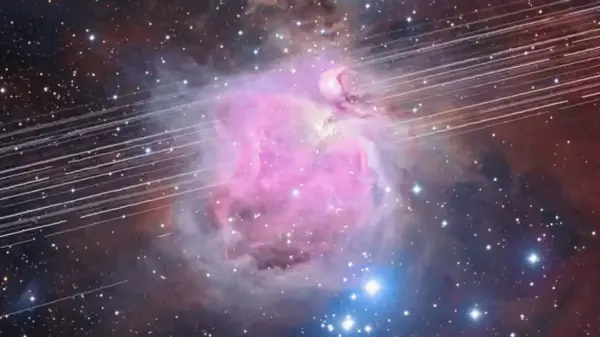
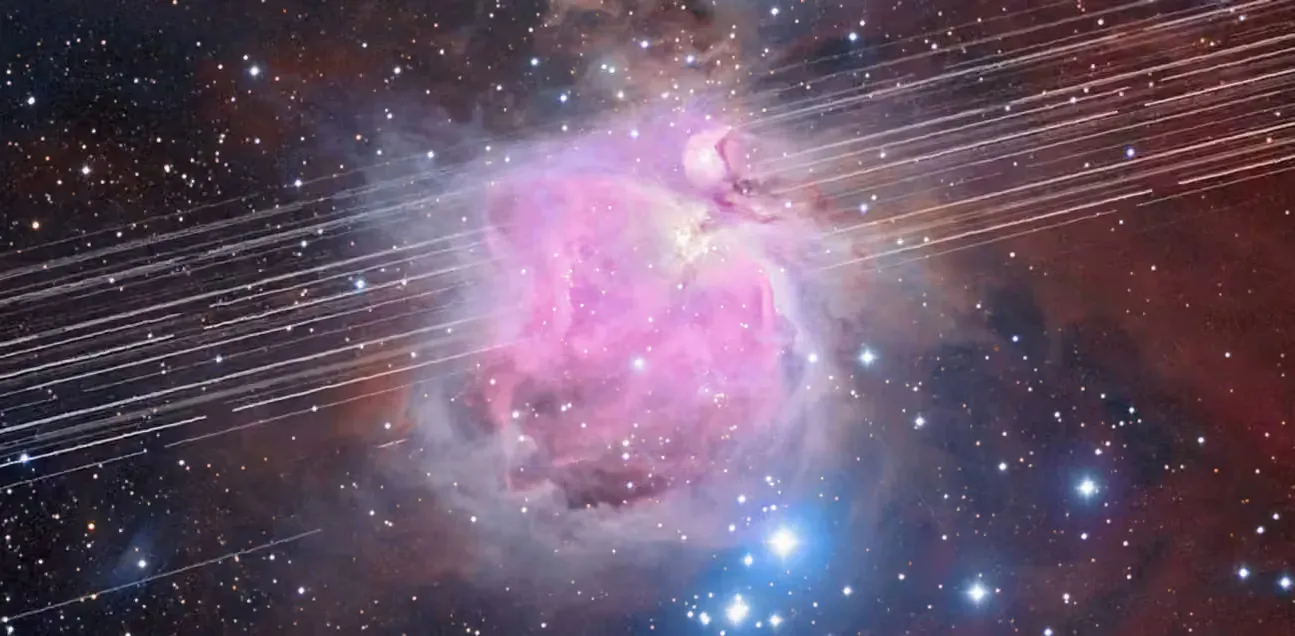
Beyond the atmospheric risks, the visual impact on humanity’s relationship with the cosmos would be profound. With millions of seventy five meter wide structures orbiting overhead, observers would likely see hundreds of bright streaks crossing the horizon at any given moment, erasing the pristine darkness enjoyed by previous generations. There is also the looming threat of Kessler Syndrome, a catastrophic chain reaction where colliding satellites create clouds of debris that trigger further crashes, potentially rendering low Earth orbit impassable for decades.
Despite these concerns, the FCC appears eager to embrace the vision, even citing science fiction concepts like becoming a Kardashev II civilization in its justifications. However, skeptics question whether the laws of physics and economics will allow Starmind to ever fully materialize. Cooling high performance processors in a vacuum is notoriously difficult, often requiring significant downtime to shed heat. Coupled with an AI market that many believe is currently in a speculative bubble, some wonder if this ambitious celestial architecture will remain a theoretical exercise rather than an orbital reality.