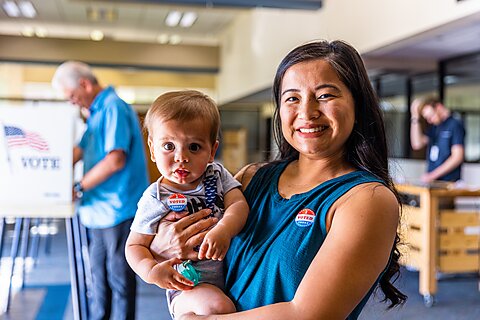
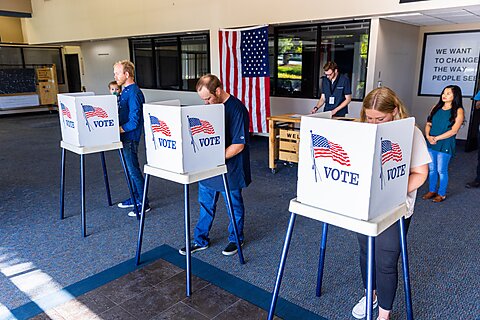


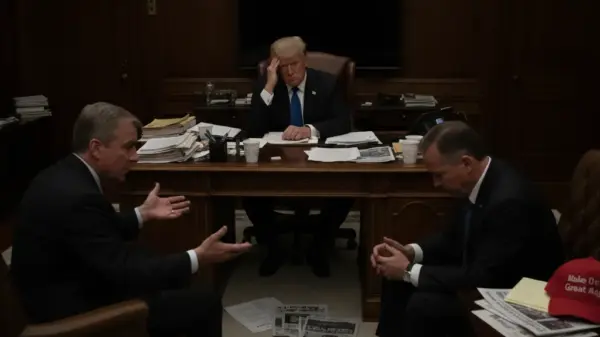
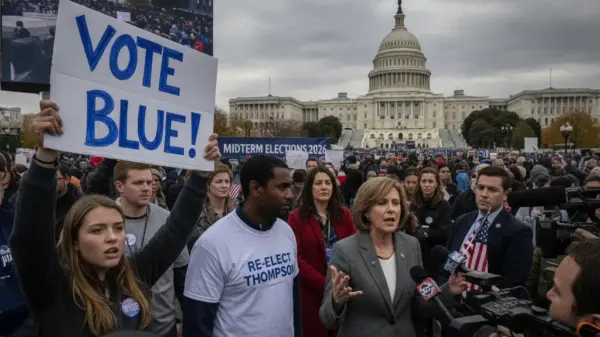






Last night’s midterm elections saw voters smash almost anything with the faintest hint of red. Now the blame game will begin, with different factions of Trumpworld blaming others for the defeat.
Let me put my cards on the table here: I’m the guy who annoys my foreign policy colleagues by arguing voters almost never care about foreign policy. Historically, I’ve likened US foreign policy to polo: A sport played almost entirely by elites. To the extent voters have opinions on foreign policy, they’re mostly a confused mess, but more importantly, the issue is rarely salient, even in presidential elections where a lot is at stake, foreign policy-wise. This gives me no joy as a foreign policy guy, but facts don’t care about my feelings.
On Iran and the midterms, though, my colleague Katherine Thompson laid out the case well in a Washington Examiner piece yesterday. Thompson pointed to Trump’s campaign themes on foreign policy involving ending and avoiding wars and just how unpopular the Iran War has been since it started.
But most importantly, it was the connection between the unpopular war and the economic dislocation it caused, which was the aberration here. In general, US wars’ costs are hidden from view by the all-volunteer force and deficit spending. In this case, the pain in voters’ hands was undeniably connected to that sizzle and smell coming from the stove.
An AP poll from late October showed that “ending the war with Iran” was voters’ second priority after “lowering the cost of living.”
In a conflict without large numbers of US deaths, this is striking and suggests voters dislike the war because they correctly link it to the rapid rise in the cost of living. An AP poll yesterday showed that “about 6 in 10 say higher-than-usual prices are ‘more because of Trump’s policies’ rather than ‘more because of factors outside Trump’s control.’” In a poll from September 2026, 65 percent of voters similarly blamed “Trump’s policies.” The president’s approval rating on handling the economy dropped sharply from March to April. (Trump started the war February 28.)
Admittedly, this is all impressionistic, and Trump’s policies on immigration, trade, and elsewhere predated and have contributed to increased prices as well.
But if we run a counterfactual without the rapid rise in energy prices and in items downstream from energy prices that the Iran war produced, it is tough to see a complete Republican wipeout on the order of the 2026 midterms.
At any rate, these issues and more will be featured at our November 17 conference on foreign policy, the midterms, and the future of America First. Please register and attend.