

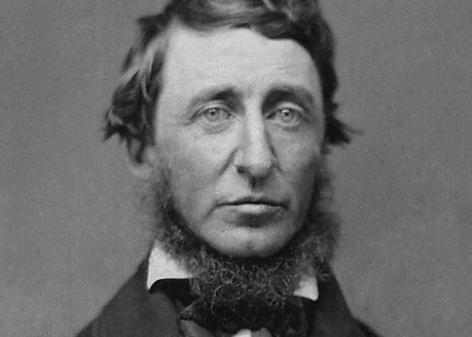





















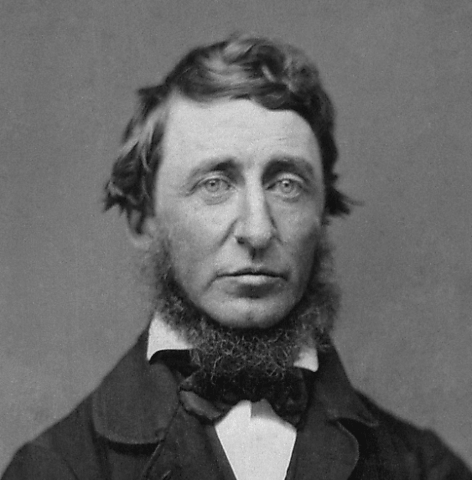
One of our American heroes is Henry David Thoreau, born in Concord, Massachusetts, in 1817, and died there in 1862.
Note his short life: 44 years. I am 83, having been saved, as most of us have many times over, by the modern medicine that one of Trump’s ministers wants to abandon. Nowadays I find myself calculating the appalling shortness of life in former times. Some of the greats lived long—Socrates, Milton, Euler, Goethe, Twain, Borges, and your own Joaquim Maria Machado de Assis. They lived long enough, at any rate, to explore fully the range of their astonishing talent and craft.
But it appalls anyone who knows them to hear about John Keats, the English poet (1795–1821), Franz Schubert, the German composer (1797–1828), or Srinivasa Ramanujan, the Indian mathematician (1887–1920). Mozart dying at age 35 and Orwell at age 49 drives me crazy. Orwell was becoming a great liberal. And Mozart was, well, Mozart. My greatest lament is for Jane Austen (1775–1817). Forty-one years was not enough. She was beginning to widen her focus to urban and commercial life—towards which she was by no means automatically hostile, as so many literary people have been. Baudelaire.
Thoreau is usually thought of as a pioneering environmentalist. He was. Note that he was born and died in a little town. He went to Harvard near the big city of Boston but came back and spent the rest of his life reflecting on how to live in nature. He became a casual laborer and a land surveyor and, at one point, ran his father’s business making pencils.
But then he lectured and wrote. His most famous book, Walden: Life in the Woods (1854), tells of his two-and-a-half years living in a little cabin alone on the shore of a little lake in Concord. For all his life he was a naturalist, intensely curious and sharply observant about life in all its details. He just had time to be one of the very first American readers of Darwin’s Origin of Species, which confirmed, against the common belief in the spontaneous generation of life out of inorganic material, his belief that all life came from seeds, right back to the origin. Walden has inspired lovers of nature ever since.
But the better reason to love Thoreau, and to lament that he did not have the time to elaborate on this side of his life and thought, and to have greater influence on the world through it, is that he was a thoroughgoing liberal.
He was a fierce abolitionist, for example, and active in the so-called Underground Railroad, spiriting slaves to Canada. But his most important liberal work was his long essay of 1849, Civil Disobedience. It has been an inspiration to liberation movements worldwide, such as Gandhi’s in India, Martin Luther King’s in the U.S., and Nelson Mandela’s in South Africa.
But what is not realized by most people, who think of Thoreau as a man of the modern statist left, is the depth of his liberalism. The opening sentence of Civil Disobedience is, “I heartily accept the motto, ‘That government is best which governs least,’ and I should like to see it acted up to more rapidly and systematically.”
Yes, Henry.