


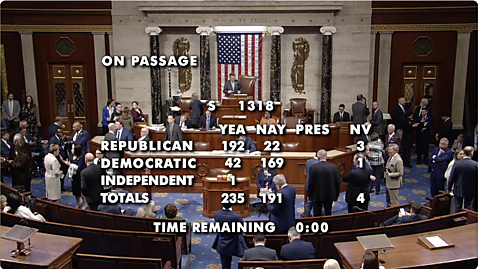


Legislative action to avert a lapse in Title VII of the Foreign Intelligence Surveillance Act (FISA) authority is in the frantic stage now, as it’s expected the Senate will ignore the House 702 reauthorization bill passed yesterday and instead pass a 45-day extension of the existing FISA Section 702 program. But if that Senate extension is not acted on by the House until after midnight tonight, Section 702 could lapse temporarily. And it would be no big deal at all if it did.
If Section 702 lapses, the Justice Department and the US intelligence community could still collect foreign intelligence information on foreign entities, including terrorist organizations, through several remaining authorities. Collection under Executive Order 12333—which governs the bulk of NSA’s overseas foreign intelligence collection—would be entirely unaffected by a §702 lapse, as would traditional FISA Title I individualized warrant-based collection against foreign powers and their agents.
Further, a §702 lapse would not immediately end currently authorized §702 collection. The FAA’s statutory transition provisions provide that any order, authorization, or directive issued pursuant to Title VII of FISA shall remain in effect until its stated expiration date. Because the FISC authorizes §702 collection annually, the National Security Agency (NSA) and other intelligence agencies can continue acquiring foreign intelligence under any currently valid FISC certification until that certification expires, even if the statute itself has lapsed. The Foreign Intelligence Surveillance Court (FISC) can likewise continue administering previously authorized acquisition procedures during that period.
Additionally, Acting Attorney General Todd Blanche would retain authority to conduct warrantless surveillance on an emergency basis via 50 U.S.C. § 1805(e). Under that provision, the Attorney General may authorize emergency electronic surveillance without prior judicial approval where an emergency situation exists and the factual basis for a FISC order exists. However, the Attorney General must notify a FISC judge at the time of authorization and must submit a formal application to the FISC—in no event later than seven days after green-lighting the surveillance.
Bottom line: Uncle Sam will still be able to identify, surveil, and capture or kill terrorists overseas plotting to attack America even if Section 702 lapses for a bit. What’s most important is getting a final FISA Section 702 reform that ensures the FBI needs probable cause to rummage through American’s digital data swept up under this program.