




When the Drug Enforcement Administration (DEA) placed psychedelics in Schedule I (“no currently accepted medical use and a high potential for abuse”) in 1970, it created regulatory barriers that make clinical research on their efficacy, dosing, and therapeutic use far more difficult. At the same time, most psychedelics—whether plant-based or synthetic, such as LSD and MDMA—are off-patent. While companies can patent specific methods of extraction or synthesis, the lack of exclusivity gives them little financial incentive to invest in the costly process of securing DEA approval for clinical research.
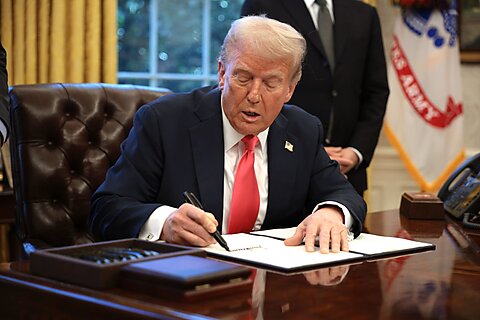
On April 17, President Trump signed an executive order directing federal agencies to reduce barriers to psychedelic research, aiming to accelerate studies of substances such as LSD, psilocybin, and MDMA (“ecstasy“ or “Molly”). The order also allocates $50 million to support state-level research on ibogaine, a psychedelic being explored as a treatment for opioid use disorder—funding expected to benefit Texas, which has already invested heavily in studying the drug.
Research Isn’t the Problem
Clinical trials using psychedelics to treat mental health and substance use disorders are not new. Currently, several trials are exploring psilocybin (and its active metabolite, psilocin), LSD, dimethyltryptamine (DMT), and ibogaine for conditions such as depression, PTSD, alcohol use disorder, addiction, traumatic brain injury, and other mental health issues, with promising results.
In 1985, despite extensive hearings on its medical value, safety, and abuse potential—and DEA Administrative Law Judge Francis D. Young’s conclusion that it belonged in Schedule III, reserved for drugs with moderate to low dependence risk—the DEA placed MDMA in Schedule I.
Lykos, a public benefit corporation spun out of the Multidisciplinary Association for Psychedelic Studies, submitted Phase 3 trial data to the FDA seeking approval of MDMA-assisted therapy for PTSD. In June 2024, an advisory committee voted 9–2 against approval, even though a 2023 multi-site, randomized, double-blind study published in Nature found that 86 percent of patients receiving MDMA with psychotherapy experienced reduced symptom severity after 18 weeks.
The advisory committee argued that true blinding is difficult because patients can often tell whether they received MDMA based on its well-known psychoactive effects—a challenge common to many trials involving psychoactive drugs. After the vote, roughly two dozen clinicians and researchers from leading U.S. and U.K. institutions issued a consensus statement supporting MDMA-assisted therapy, arguing that concerns about “functional unblinding” do not undermine the overall findings and that the evidence for efficacy remains strong. The FDA nevertheless declined approval and required additional research.
Approval Doesn’t Mean Access
Even if the president’s executive order eliminates much of the red tape clinical researchers face when conducting clinical trials, we shouldn’t be overly optimistic that patients will have access to these drugs for psychedelic-assisted psychotherapy anytime soon. Under the current framework, the FDA must first determine that a psychedelic is safe and effective for a specific therapeutic use before clinicians can prescribe it—a process that can take 10 to 12 years. The DEA must then reschedule it from Schedule I to a less restrictive category.
Decades of prohibition-era messaging may also shape how FDA reviewers evaluate these substances. Even if the agency approves them, it remains unclear whether it will allow meaningful patient access—or what constraints it will impose.
Even after that, access will remain tightly controlled. The FDA is likely to require that patients obtain the drug through a licensed clinician—typically a physician or nurse practitioner—and may impose a Risk Evaluation and Mitigation Strategy (REMS) that specifies who may administer it and under what protocols.
In other words, the very agencies that kept these therapies out of reach for decades will now control how—and by whom—they are delivered.
Expertise Outside the System
By keeping psychedelics in Schedule I for decades, the DEA pushed therapeutic use outside the formal medical system. As a result, many of the most experienced practitioners honed their skills through underground networks, hands-on practice, and apprenticeships with traditional healers in places like Peru and Brazil.
Before the DEA banned MDMA in 1985, psychologist Leo Zeff trained thousands of therapists in its use, helping establish a body of knowledge that still shapes psychedelic therapy today—despite being long ignored or criminalized by the very authorities that now seek to regulate it.
Under the current pathway, the FDA will likely restrict prescribing and administration to licensed clinicians who often lack meaningful training in psychedelic-assisted therapy. Medical education still offers little to no instruction in this area, and when psychedelics appear at all, they are usually framed as substances of abuse rather than as therapeutic tools.
Meanwhile, many of today’s most experienced practitioners are not physicians but psychologists, social workers, and others who developed their expertise through specialized programs, underground practice, or international training. By privileging formal credentials over relevant experience, the current framework risks sidelining the clinicians best equipped to deliver these therapies effectively.
We already see the consequences of ketamine, a dissociative anesthetic with psychedelic-like properties. Physicians—often anesthesiologists—without relevant psychiatric or psychotherapeutic training operate clinics that focus on drug delivery while neglecting integration and psychological support—elements many experts consider essential to effective treatment, which can lead to inconsistent results and limited durability of benefit.
States Are Moving Ahead—But Federal Law Holds Them Back
While all classic psychedelics remain in Schedule I under federal law, several states have moved in a different direction. Oregon led the way in 2020 by legalizing psilocybin services, followed by Colorado in 2022, which adopted a broader framework that includes decriminalization and regulated healing centers. New Mexico adopted a medical psilocybin model in 2025, and New Jersey authorized a pilot program in 2026 that has yet to launch. Importantly, these laws generally apply only to natural psychedelics—not to synthetics like LSD or MDMA.
States like Oregon and Colorado now license facilitators to guide psychedelic sessions in regulated settings, typically without requiring medical credentials. These programs emphasize support and safety rather than formal psychotherapy.
Still, these systems face real constraints. Because federal prohibition remains in place, providers contend with punitive tax rules, limited access to banking and insurance, and high compliance costs. The result is a growing disconnect between state-level models built around guided use and a federal framework that treats psychedelics strictly as medical products.
A Better Path Forward
In a recent blog post, I proposed an alternative federal framework to reduce barriers to psychedelics—one that may reassure policymakers who prefer FDA oversight while enabling broader access beyond the traditional licensed medical model. The approach would draw on the framework Congress created in 1994 with the Dietary Supplement Health and Education Act (DSHEA). That law shifts responsibility to manufacturers to ensure their products are safe and accurately labeled before reaching the market. The FDA does not pre-approve supplements, but can intervene if products are adulterated or misbranded. It also sets basic labeling standards and requires good manufacturing practices to help ensure quality.
DSHEA works because it relies less on preemptive gatekeeping and more on transparency, accountability, and consumer choice. Psychedelic policy needs a similar shift—from paternalism to autonomy.
Psychedelics are not dietary supplements, and they don’t fit neatly into the pharmaceutical model either. Many are used intermittently, often lack patent protection, and derive much of their therapeutic value from context, preparation, and support rather than from their chemical properties alone. Congress should consider adapting a DSHEA-like framework to psychedelics—while removing DEA control—to reduce barriers, ensure product quality, and expand access.
Along these lines, Julia Etkin and Vincent Joralemon of Harvard Law School’s Petrie-Flom Center suggested regulating psilocybin under food law rather than drug law.
Prohibition law scholar Victoria Litman believes that a better approach is for Congress to formally devolve authority over naturally occurring psychedelics to the states, aligning federal policy with the reality that states are already leading reform while federal capacity and enforcement remain limited. Congress has largely tolerated these state experiments in practice, rarely enforcing federal law against compliant programs, yet it continues to maintain legal barriers that keep prices high and access limited. By ceding authority to the states, Congress could remove these obstacles without expanding FDA control, allow states to tailor policies to their populations, and promote a “laboratories of democracy” approach that improves access while identifying best practices.
In a paper in progress that we hope to publish in Regulation, Litman, Cato Research Associate Akiva Malamet, and I will explore these two innovative regulatory strategies aimed at ensuring product quality while expanding patient access to experienced and knowledgeable psychedelic therapists and other professional support options.
Speeding Research Isn’t Enough
President Trump’s executive order may speed research, but it leaves the larger problem untouched. A system that spent decades blocking access cannot suddenly become an efficient pathway to care without deeper reform. If policymakers are serious about helping patients, they must move beyond studying psychedelics and start removing the barriers that keep them out of reach.