



Conventional wisdom holds that lax mortgage underwriting standards contributed to the 2008 Financial Crisis. Ostensibly, legislators intended the 2010 Dodd-Frank Act’s Ability to Repay (ATR) and Qualified Mortgage (QM) requirements to address that problem by tightening underwriting standards.
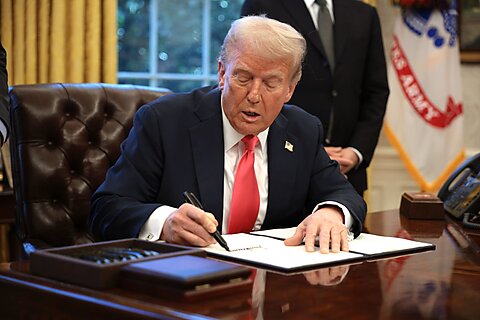
These requirements were controversial from the start, and President Trump’s new executive order, “Promoting Access to Mortgage Credit,” is the latest attempt to address critics’ concerns. The executive order (EO) aims to make mortgages more accessible by reducing the very high costs of the ATR/QM regime and other aspects of mortgage regulation.
The EO includes some worthwhile recommendations but falls short in merely calling for new agencies to “consider” the recommendations “as appropriate and consistent with applicable law” in new rulemakings. No one can predict what the final rules will look like, but history suggests that new rules will not fix the problems created by regulations required by the Dodd-Frank Act. (If previous attempts to fine-tune the rules had worked, the new EO would be pointless.)
The remainder of this post assesses some key features of the EO.
The EO Has the Right Idea
The EO correctly notes that Dodd-Frank-era mortgage regulations created significant problems. For example, under the ATR regime, lenders can be sued by a defaulting borrower unless (at the time the lender originates the loan) the lender exhaustively documents the borrower’s ability to repay. However, if the lender issues a Qualified Mortgage (QM), the lender enjoys a safe harbor from this liability.
The catch, of course, is that regulators detail exactly what terms a mortgage may include to qualify as a QM loan, dictating permissible rates, points, and other terms. This approach has raised compliance costs and constrained lenders’ flexibility.
In response, some small lenders stopped offering mortgages, and many banks reduced lending to low-income borrowers while increasing lending to high-income borrowers. Few lenders now offer mortgages for smaller amounts because they are no longer profitable. Combined, these changes suggest that the Dodd-Frank rules came with a very high price tag.
Thus, the EO proposes that regulators tailor rules or expand exemptions for smaller banks. For example, it proposes a broader safe harbor from ATR liability for smaller banks. A safe harbor for more small lenders would have to be very generous to be effective, though, because banks that originate fewer than 2,000 loans per year are already exempt from some QM requirements.
Effectively, this EO provision admits that the QM/ATR rules are prohibitively expensive, especially for smaller banks unable to absorb high compliance costs. But one should also consider why the rules are needed for lenders of any size, especially as the real cost is ultimately borne by households most likely to need smaller loans or flexible terms.
The administration should start by asking why any lender would purposely lend to borrowers it doesn’t deem creditworthy. Defenders of the ATR/QM regime might argue that the rules were needed to prevent widespread predatory lending, but pre-2008 lenders shared borrowers’ optimism about housing prices. That is, lenders did not often anticipate default (a strategic borrower response to falling prices). Setting borrowers up to fail should not be so common as to justify making all lenders bear the risk of being sued by a defaulting borrower on top of ordinary default risk unless they submit to being micromanaged by regulators.
Analogously, our laws do not force car manufacturers to install throttle controls blocking drivers from speeding to hamper the flight of a few car thieves, because the unfairness and burden of such a law would far outweigh the gains. Moreover, such draconian laws tend to create problems of their own, and making lenders responsible for borrowers’ future financial problems creates moral hazard. If reckless lending is pervasive, policymakers should address the root causes (such as underpriced mortgage insurance) directly. Policymakers could also devise targeted remedies applicable ex post in clear cases, perhaps based on ordinary consumer protection laws and common-law theories of unconscionability.
The EO also urges regulators to consider the substance of lenders’ policies—“materiality” or “effectiveness”—rather than focusing on technical correctness (box-ticking). For example, it proposes changing the Truth in Lending Act disclosure timing rules to focus on material disclosures. Indeed, box-ticking exercises in supervision are expensive and unproductive. But refocusing regulators on substance over form does not relieve people from the burden caused by the underlying regulation. Moreover, disputes over what is “effective” or “material” will arise, and stakeholders will struggle for clarity and stability.
Also, the EO urges regulators to consider lenders’ good-faith efforts and/or allow lenders to correct errors rather than cracking down on every technical violation. For example, in enforcing consumer protection laws, the EO urges regulators to consider lenders’ good-faith efforts and to avoid imposing civil penalties except in cases of reckless or willful violations. This policy would improve the lending environment but is unlikely to outlast the current administration.
The EO Also Has Some Misses
By contrast, the EO’s proposed changes to liquidity and capital rules contradict the deregulatory thrust of the other proposals. For example, the EO proposes creating Federal Home Loan Bank (FHLB) liquidity programs for “entry‑level housing, owner‑occupied purchase loans, and small residential builders.” Similar programs already exist, including the FHLB Affordable Housing program, the Small Business Administration’s capital loans for home builders, Rural Development programs, and Fannie Mae and Freddie Mac loans. Subsidized public programs introduce more regulations, and they share the market with private lenders, distorting pricing and competition. Rather than expand this system, the administration should work with Congress to stop subsidies and shrink the role of the GSEs.
The current mortgage regulatory regime is flawed, and fundamental change is needed to provide relief. But no EO can fundamentally alter the dynamic set in motion by the Dodd-Frank Act—inflexibility, overregulation, and compliance burdens that give the largest firms a competitive advantage. Lasting change will require legislators to repeal or amend the law, and the administration should support Congress in these efforts.
Fortunately, elected officials have empirical data to support these kinds of changes. For example, several studies cast doubt on the dominant theory of what caused the 2008 financial crisis—the theory upon which Dodd-Frank was based. Contrary to conventional wisdom, it appears that system-wide mortgage risk began to rise in the early 1990s and was not primarily due to borrowers with low credit scores or to non-standard loan terms.
This new evidence also refutes the idea that the crisis was caused by lenders tricking uninformed borrowers into loans they could not pay back. Thus, the ATR/QM rules do not address the main cause of the 2008 crisis.
Moreover, it is doubtful that the ATR/QM rules contain risk consistently because regulators have yielded to political pressure to expand credit. For example, the QM rules no longer require lenders to check debt-to-income ratios or mortgage default rates. More risk comes from programs like the GSEs’ Home Affordable Refinance Program (HARP) (which ran from 2009 to 2018), and FHA and VA loans (with defaults rising and risk linked to economic stress consistently high). The GSEs experiment prematurely with new credit score models, and taxpayers bear significant risk, just as they did before Fannie and Freddie were placed into government conservatorship in 2008.
The EO is Better Than Nothing
Overall, the EO takes a few cautious steps forward and a few incautious steps backward. It is unclear what new rules inspired by the EO will say and whether they will outlast the current administration. Still, this EO will not restore a mortgage market driven by market fundamentals instead of regulatory dictates. To foster market-driven lending, which would best serve most Americans, the administration should work with Congress to reverse the many harmful federal housing policies that have existed for decades.
Even Dodd-Frank’s defenders must recognize that federal housing policy is plagued by distortions that have never been addressed. These distortions include:
- Federal policies that favor single-family homeownership over renting.
- Too-big-to-fail and deposit insurance policies that subsidize risk.
- Mortgage insurance—especially public-sector-provided insurance—priced too low for the risk and crowding out private alternatives.
- Preferential treatment (effectively, subsidies) for GSEs (which pay nothing for Treasury-backed guarantees) that let them underprice other lenders and insurers.
Federal policymakers want lenders to be more generous and, at the same time, to be more careful. They want housing to be affordable but subsidize buyers, which drives prices up. Compared to other countries, the United States federal government plays an outsized role in micromanaging mortgage markets, and it is not working.