
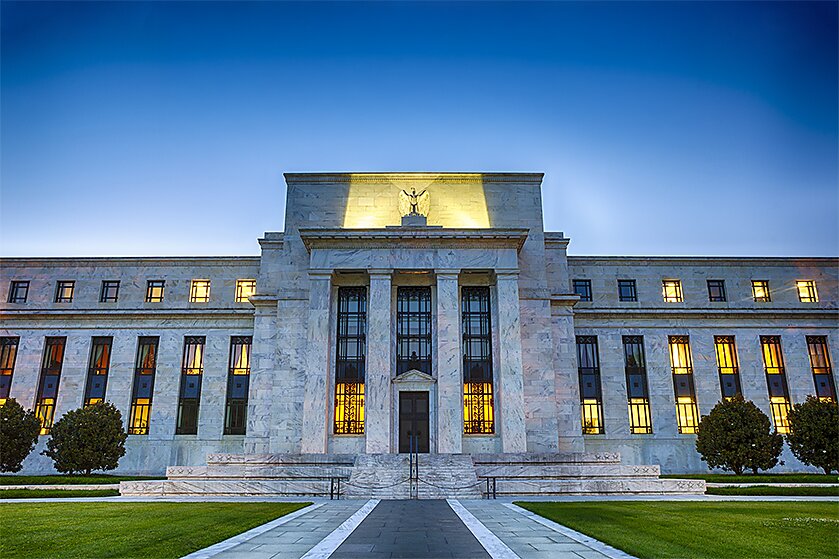
President Trump has formally nominated Kevin Warsh to succeed Jerome Powell as chair of the Federal Reserve, whose term expires in May. A Senate Banking Committee confirmation hearing is expected in the coming weeks. Warsh is a former Fed governor and a long-standing critic of the Fed’s post-crisis policy record.
Much of what Warsh has said is encouraging. But a confirmation hearing is one of the few opportunities for Congress to put a nominee on record before handing them this consequential economic policy role. Here are some questions that would make that hearing genuinely useful.
1. Fed Independence
The president and members of his staff have hurled insults and attacks at Fed Chair Powell to force lower rates. Now, the sitting chair is facing a federal criminal investigation that many observers, across parties, have criticized as politically motivated. You have emphasized the importance of Fed independence, but personal commitments to independence have proven insufficient in the past. What specific steps would you take as chair to insulate rate decisions from executive branch pressure?
2. Fed Discretion
The Fed’s broad discretion enables both policy errors and political interference. When there is no transparent framework governing rate decisions, the public has no clear basis for holding the institution accountable. What concrete steps would you take to make monetary policy more predictable and transparent? Would you support congressional legislation to formally constrain that discretion, even at the cost of your own flexibility?
3. Inflation and Interest Rates
You have a well-documented record as an inflation hawk. Recently, you have cited AI-driven productivity gains as creating room for lower target rates. That argument may prove correct, but it represents a meaningful shift from your prior positions. What specifically changed in your analysis, and if those productivity gains fail to materialize on the expected timeline, how would that affect your approach to rates?
4. Balance Sheet Normalization
You have criticized quantitative easing and expressed support for reducing the Fed’s balance sheet, which currently stands at roughly $6.6 trillion. A significant portion of those assets are Fannie Mae and Freddie Mac mortgage-backed securities—instruments that blur the line between monetary and fiscal policy and distort housing finance in ways that are properly the domain of elected fiscal authorities. What is your timeline for returning the Fed’s balance sheet to a sensible state, both in terms of its size and the scope of assets that it encompasses?
5. Interest on Reserves
Since 2008, the Fed has paid interest on reserves held by commercial banks. As rates rose post-pandemic, those payments ballooned, generating nearly $200 billion in operating losses that were effectively deferred onto the public balance sheet. Do you think the Fed faces a tradeoff between raising rates to stabilize inflation and the losses it suffers from paying interest to depository institutions? Would you support a return to the corridor system of interest rates that prevents the use of interest on reserves?
6. Fiscal Dominance
Federal debt now exceeds $38 trillion, and interest costs are projected to consume a rising share of federal revenues over the coming decade. The risk that fiscal pressure eventually compromises your willingness to tighten when needed, a modern version of the pre-1951 Treasury accord problem, is real. What is your framework for maintaining the price stability mandate under those conditions? Would you support statutory guardrails to protect that independence?
7. Central Bank Digital Currencies
One key point of disagreement with Warsh is regarding a potential central bank digital currency. My colleague Nick Anthony has written extensively on what senators should ask Warsh about CBDCs. Here are two such questions:
- The American people, Congress, and President Trump have taken a firm stance against a central bank digital currency (CBDC). Do you still stand by your argument that the United States needs to issue a wholesale CBDC?
- Federal Reserve Chair Jerome Powell suggested that a wholesale CBDC is unnecessary, considering it would look a lot like existing bank reserves. Given the state of bank reserves, advancements in the private sector, and the introduction of FedNow, do you agree with Chair Powell’s assessment?
Warsh is presenting himself as a reform candidate, and on the substance, much of what he has said is promising. What matters now is whether he is willing to commit on the record, in a public hearing, to changes that would bind the Fed to a better future path. Congress should use this opportunity to find out.