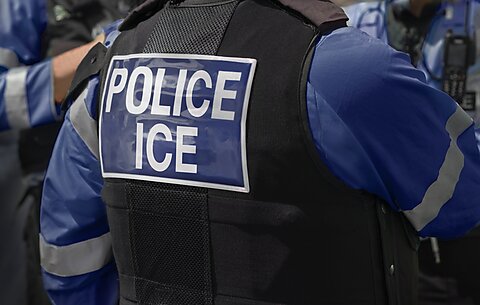



One of the concerns I and others in civil society have raised is that in light of Trump 2.0’s rather expansive assertions of immigration enforcement authority nationwide, officials may claim the authority to conduct immigration enforcement actions in proximity to polling places during the 2026 congressional elections. This week, Heather Honey, the Department of Homeland Security’s (DHS) deputy assistant secretary for election integrity, reportedly told a number of state election officials on a conference call that Immigration and Customs Enforcement (ICE) agents would not be deployed at polling locations.
According to ABC News, a subsequent DHS statement provided more details:
ICE is not planning operations targeting polling locations. ICE conducts intelligence-driven targeted enforcement, and if an active public safety threat endangered a polling location, they may be arrested as a result of that targeted enforcement action.
But before you breathe a sigh of relief, listen to what Maine Secretary of State Shenna Bellows shared with reporters:
When we asked about state sovereignty and could the federal government make public statements reinforcing the constitutional principle that the states, not the federal government, were in charge of elections, there was a stunned silence.
What I zeroed in on was Honey’s selective language: ICE agents would not be deployed at polling places. Could they conduct patrols or establish checkpoints on public streets or sidewalks leading to a polling place instead?
The Immigration and Nationality Act (8 U.S.C. § 1357(a)(3)) authorizes immigration officers to interrogate any person believed to be an alien about their right to be in the US. On the surface, that sounds cut-and-dried from a legal standpoint. It’s not.
At least three Supreme Court cases create real legal obstacles to the “let’s catch them on their way to the polls” scheme:
- Almeida-Sanchez v. United States, 413 U.S. 266 (1973) held that warrantless roving patrol searches are unconstitutional.
- United States v. Brignoni-Ponce, 422 U.S. 873 (1975) requires reasonable suspicion for roving patrol stops.
- United States v. Ortiz, 422 U.S. 891 (1975) prohibits vehicle searches at checkpoints without probable cause.
And there’s yet another problem for any DHS effort to put armed personnel even in general proximity to a polling place: 18 U.S.C. § 592—Troops at Polls. The statutory text is instructive:
Whoever, being an officer of the Army or Navy, or other person in the civil, military, or naval service of the United States, orders, brings, keeps, or has under his authority or control any troops or armed men at any place where a general or special election is held, unless such force be necessary to repel armed enemies of the United States, shall be fined under this title or imprisoned not more than five years, or both; and be disqualified from holding any office of honor, profit, or trust under the United States (emphasis added).
I highlighted the word “civil” because it would clearly apply to any federal law enforcement personnel—ICE, FBI, etc.
If DHS were to attempt this, the legal challenge to it would be straightforward and multipronged by the attorney general of any state so affected. The problem, therefore, is not so much legal as political and psychological. Just going forward with this kind of coercive, armed agent election interference would cause chaos, confusion, and terror—all things that could suppress voter turnout in the targeted jurisdictions.
To the extent that there’s a bright spot in all of this, it’s that election officials across the country and their state legislatures are very much alive to the threat, even going so far as to war-game potential election threat scenarios. Here’s hoping such preemptive defensive measures have the desired deterrent effect.