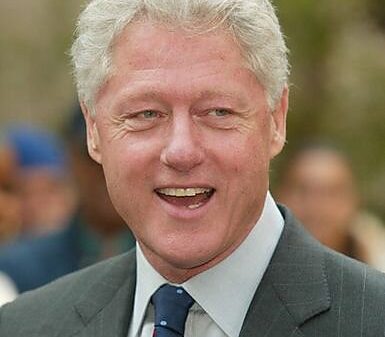
Yesterday, I described the final scandal of the Clinton administration: Bill Clinton’s midnight pardon of Marc Rich. If the Rich pardon was a snowflake, then the pardons of President Trump’s second term are a blizzard.
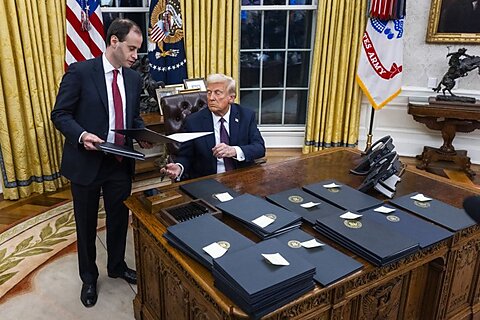
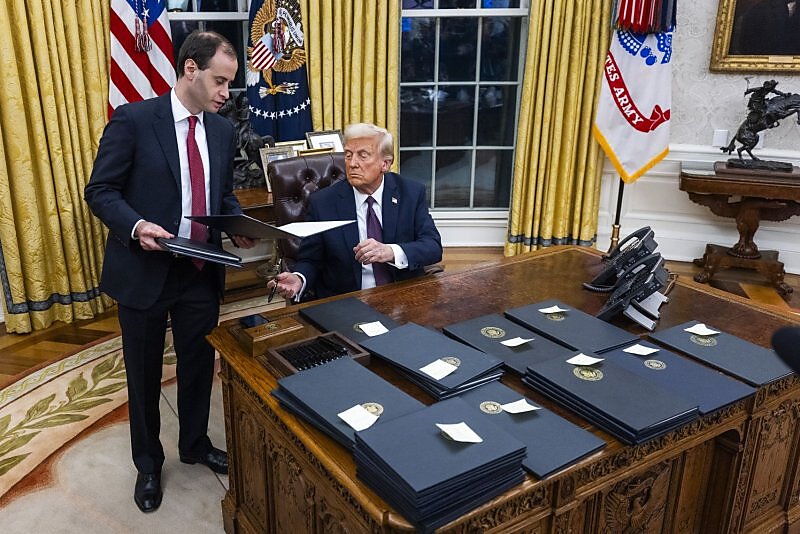
The scope and magnitude of Trump’s second-term pardons are unprecedented. Joe Biden granted 80 pardons in his four-year term, but Trump’s pardons make his predecessor’s look like a drop in the bucket. In the first year of the second Trump administration, the president issued 166 individual pardons, as well as a mass pardon that erased the verdicts of more than 1,500 January 6 Capitol rioters. In other words, even putting aside the rioters’ collective pardon, Trump is now issuing pardons at eight times the rate Biden did. Nonetheless, the fact that a president issues more pardons than his predecessors is not necessarily problematic. The real problem lies in the great number of particular second-term pardons that appear indefensible. Such pardons fall into five categories.
First: Biden’s pardons eliminated roughly $680,000 in financial penalties (fines, restitution, and forfeitures) owed to victims or the government. In contrast, Liz Oyer, the former lead pardon attorney of the United States, has calculated that Trump’s second-term pardons have forgiven criminal debts of more than $1.5 billion. This staggering sum—composed of money owed to crime victims and to government treasuries—has been zeroed out by presidential edict.
Trump’s pardon pen was a boon to ex-criminals like Trevor Milton (who no longer must repay the investors he defrauded $660 million) and Lawrence Duran (who no longer must repay the government he defrauded $87 million). It was also a boon to HDR Global Trading Ltd., which owed the nation a $100 million fine; in this case, Trump also made history by granting the nation’s very first pardon to a corporation.
Second: Trump has normalized the pardoning of disgraced politicians, such as former Honduran president Juan Orlando Hernandez (who orchestrated a spree of state-sponsored drug trafficking leading to a 45-year prison term), Nevada legislator Michele Fiore (who embezzled $70,000 out of a police memorial fund for personal expenses like rent and plastic surgery), Virginia sheriff Scott Jenkins (who handed out badges to untrained businessmen in exchange for $75,000 in bribes), and Tennessee House Speaker Glen Casada (who defrauded state government with a fake-payee kickback scheme). Perhaps I should disclose my proximity to one such pardon recipient, Arkansas legislator Jeremy Hutchinson (who traded official acts for bribes, embezzled from campaign funds, and filed false tax returns); Hutchinson’s tenure in the state Senate, which ended with simultaneous indictments in three federal districts, began when he defeated me in a Republican primary.
Third: Trump’s pardons are beginning to undermine the contemporaneous work of his own Department of Justice. Alina Habba, Trump’s own US attorney in New Jersey, announced Joseph Schwartz’s three-year sentence for $38 million in tax fraud in April; Trump pardoned him seven months later. Real estate developer Timothy Leiweke was charged earlier this year with conspiring to rig the bidding process for a Texas sports arena; Trump pardoned him in December. Federal investigators and prosecutors must find such pardons demoralizing and self-negating.
Fourth: Several features of Trump’s pardons set off alarm bells for self-corruption—either of the president or of his associates. For instance, the ordinary vetting procedures of the Office of the Pardon Attorney have often been sidestepped. Formality in pardon deliberation is desirable because it immunizes the president from the appearance of pay-to-play; the absence of such formality makes it plausible that a multitude of recent pardons are transactional. Trump pardoned Paul Walczak (who evaded millions of dollars in taxes) after Walczak’s mother raised millions of dollars for MAGA candidates and paid a million dollars to dine with the president at Mar-a-Lago. Trevor Milton—the securities fraudster mentioned above—donated $1.8 million to Trump’s campaign before a presidential pardon wiped out all $660 million of his restitution obligations. (That is, if nothing else, an impressive ROI.)
Before Trump pardoned Changpeng Zhao—who headed the cryptocurrency exchange Binance while it fostered more than 1.5 million illegal virtual trades as well as prohibited transactions to Al Qaeda, Isis, and Hamas—Zhao had brokered a $2 billion investment in Eric and Donald Trump. Jr.’s cryptocurrency business, World Liberty Financial. (When asked about Zhao in a subsequent 60 Minutes interview, Trump explained, “I have no idea who he is. I was told that he was a victim, just like I was and just like many other people, of a vicious, horrible group of people in the Biden administration.”
Another Trump pardon recently immunized Texas Congressman Henry Cuellar (D) and his wife from prosecution for receipt of bribes. Trump evidently hoped Cuellar would return the favor by switching parties to the GOP; when that didn’t happen, the president released an angry statement on Truth Social, criticizing Cuellar for “Such a lack of LOYALTY, something that Texas Voters, and Henry’s daughters, will not like. Oh’ well, next time, no more Mr. Nice guy!” Previous presidents would surely take offense at the suggestion that a pardon could be traded for something of value; Trump took offense apparently because Cuellar didn’t hold up his end of the trade.
Fifth: Here is another occasion for alarm bells: Donald Trump has increasingly focused on providing pardons to his campaign supporters who stretched or broke the law, such as John Eastman, Rudy Giuliani, and Jenna Ellis. (As the president’s pardon attorney, Ed Martin, famously explained on X, “No MAGA left behind.”) Indeed, Trump apparently views the exercise of his pardon authority to forgive federal crimes as insufficient; Trump’s inability to eliminate state-level convictions has apparently led him to pressure state government officials to pardon state-level offenses related to the 2020 elections.
I am not the only Cato analyst who has explained the risks of political and constitutional crisis created by presidential attempts to get state-level election criminals pardoned; normalizing such actions will inevitably create ripple effects in future elections. Historically, the central principle of the Justice Department’s role in elections has been “prosecution, not intervention.” The latest edition of the DOJ’s governing manual in this sphere, Federal Prosecution of Election Offenses, explains that the states have primary responsibility for overseeing elections—and that any federal investigation of elections must minimize the likelihood of affecting that election or otherwise “chill legitimate voting activities.”
That edition of the manual has disappeared from Justice’s website. Bob Bauer, Obama’s former White House counsel, has speculated that the manual is being revised to match Trump’s goal of “nationalization” of election administration.
The Supreme Court has explained that pardons are justified if “the public welfare will be better served.” It is impossible to see how the public welfare is served by many of Trump’s pardons today. The president’s power to pardon federal crimes is practically absolute. It cannot be modified by Congress. Furthermore, just as an uninvolved citizen lacks standing to challenge a prosecutor’s actions, a third party likewise may not challenge the grant of a presidential pardon. If the president is exercising his pardon power corruptly, there is no easy solution to the problem: It looks like the floodgates will remain open for the foreseeable future. Perhaps future presidents will behave better; perhaps a future constitutional amendment will encourage them to do so.
At least the specter of corruption in previous presidential administrations (Clinton’s pardon of Marc Rich, or Biden’s pardon of his son) appeared to be an exception to the rule. Today, however, the evidence is piling up that, for this president, corruption is the rule, not the exception.