





The Trump administration says that it will sell Venezuelan oil at market prices and oversee the allocation of the proceeds.
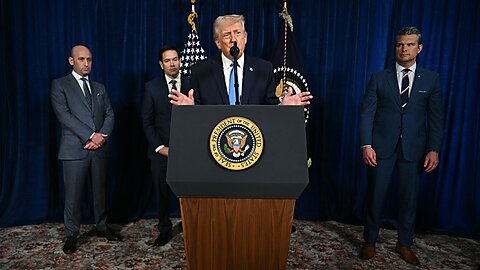
Trump framed it as a new presidential revenue stream:
This Oil will be sold at its Market Price, and that money will be controlled by me, as President of the United States of America, to ensure it is used to benefit the people of Venezuela and the United States!
Having already demonstrated a disregard for Congress’s power of the purse, the president’s “controlled by me” framing raised eyebrows. The executive branch can administer programs and executive laws, but it generally cannot create a new source of funding and then decide how to spend it.
The Miscellaneous Receipts Act stipulates that if the government receives money, it must be deposited into the Treasury, not some custom-made account for discretionary presidential use. So if Venezuela’s oil is sold and the proceeds are treated as money the US government has received, then why wouldn’t it go to the Treasury?
Even if you could get past the deposit question, the Anti-Deficiency Act (ADA) would come into play. The ADA generally bars federal officials from obligating or spending money in advance, or in excess of, appropriations. So even if the executive branch is holding the money, what legal authority allows it to disburse the funds for purposes Congress has not appropriated?
A hallmark of this administration’s policymaking is the creation of more questions than answers.
Still, the Department of Energy’s statement offers a clue: “All proceeds from the sale of Venezuelan crude oil and oil products will first settle in US controlled accounts at globally recognized banks to guarantee the legitimacy and integrity of the ultimate distribution of proceeds.”
There’s a plausible way for the administration to “control” the proceeds while avoiding treating them as federal receipts in the first place: running it through the Treasury Department’s Office of Foreign Asset Control (OFAC), which administers sanctions programs and can block assets tied to sanctioned parties and then license certain transactions under specified terms.
Instead of treating the money as federal revenue, the administration would consider the proceeds as Venezuelan-owned funds frozen in US-controlled bank accounts and then “spend” the money by authorizing specific transfers via OFAC licenses. The government would control the movement of the money by deciding what transfers are permitted and under what conditions. The White House could then claim the proceeds are “controlled” by the executive branch because the Treasury controls access.
In other words, the administration wouldn’t “spend” taxpayer dollars; instead, it would authorize the release of Venezuela’s frozen money and use that licensing power to steer the money where it wants. The Venezuelan people’s “benefit” would come from licenses granted to nongovernment parties to spend money on development projects. The American people’s “benefit” would come from licenses that channel money to US exporters, oil field services firms, engineering contractors, etc.
A concern is that if enormous sums can be effectively allocated through sanctions-licensing decisions, you’ve created a quasi-budget process inside the executive branch but without the usual appropriations transparency, committee oversight, and statutory program constraints. So, even if the OFAC route isn’t technically “federal spending,” it can function as such.
If that’s where this is headed, the central question isn’t just “is it legal?” It’s also: Do we want sanctions licensing to become a substitute for appropriations, especially when the president openly sells it as personal control over the money?