



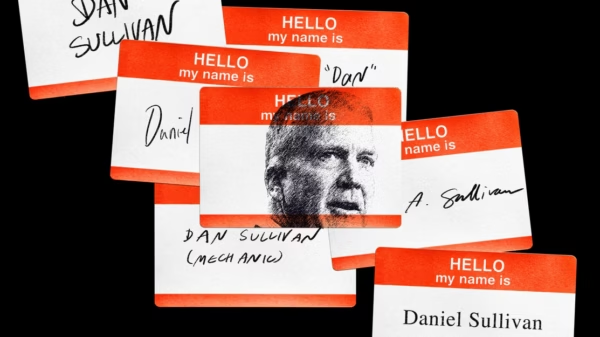














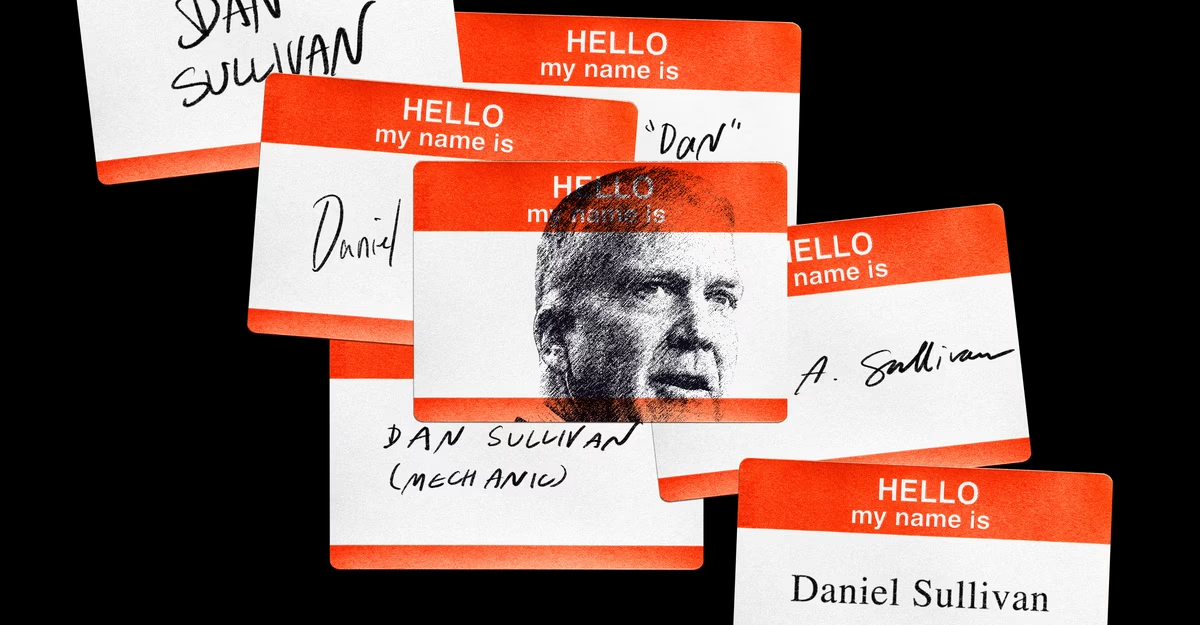
Politics in Alaska has taken a turn for the surreal as voters prepare for a Senate race that feels more like a riddle than an election. Senator Daniel S. Sullivan is fighting to keep his seat, but he now faces a challenger who shares his exact name, Daniel J. Sullivan. To make matters more confusing, former Anchorage Mayor Daniel A. Sullivan has entered the fray not as a candidate, but as an endorser of the incumbent, while cheekily branding himself as the original Dan Sullivan of the bunch. With control of the Senate potentially hanging in the balance through a ranked choice ballot, Republican strategists are spiraling over whether voters will simply pick a name they recognize without checking the middle initial.
While political operatives fret over potential sabotage and voter confusion, the rest of Alaska’s Dan Sullivans are treating the situation with amusement. From diesel mechanics in Wasilla to teachers in Nome, men sharing the name say this level of duplication is just par for the course in the Last Frontier. One resident from Chugiak noted that his coworkers already call him the senator and mentioned that having such a common name makes buying firearms a chore due to extensive background checks. Another nurse from Palmer joked that he uses his name to fish for VIP treatment at restaurants or hopes that any unpaid bills sent to a Dan Sullivan accidentally end up with someone else entirely.
The tension peaked when the National Republican Senatorial Committee branded newcomer Daniel J. Sullivan a sham candidate, accusing him of being part of a coordinated Democratic plot to siphon votes away from the incumbent via deceptive logos and similar color schemes. The senator himself described the presence of another Dan Sullivan on the ballot as an act of cheating rather than a coincidence. While state election officials initially tried to invalidate the challenger’s candidacy on the grounds that it was intended to mislead voters, Daniel J. Sullivan maintains he is simply an ordinary Alaskan tired of how he is represented in Washington.
Despite claims of conspiracy, some see it as an inevitable statistical quirk given how many Sullivans call Alaska home. The challenger, hailing from a fishing village where deer outnumber people, comes from a long lineage of Dans and insists his run is genuine despite lacking the millions of dollars fueling his opponent’s campaign. As these various men navigate their shared identity and diverging politics, Alaskans are left wondering if they can tell their candidates apart once they step into the voting booth or if they will simply cast their lot with whichever Dan seems most convincing on paper.