

The head of the US Postal Service (USPS) warned Congress last week that the government-run company was running out of cash. Postmaster General David Steiner said the USPS was facing a “severe financial crisis” and could not solve the problem on its own because of restrictions imposed by Congress.
The USPS has lost money every year since 2007 as mail volumes have plunged and the company’s productivity has declined. Its future is bleak unless Congress enacts major restructuring. The table shows factors causing the company’s decline.

The table shows that
- Mail volumes have fallen dramatically.
- Marketing mail—also called junk mail—has become the largest type of mail by volume.
- Shipping and package volume have flat-lined as the USPS faces tough competition. Also, Amazon has been reducing its use of the USPS for last-mile delivery.
- Post office visits are down 54 percent from 2000, even though the US population has increased 21 percent.
- The USPS has cut the number of post offices by just 8 percent despite the huge drop in visits.
- The USPS has cut its employees by 31 percent since 2000, but total product volume is down 48 percent.
- Employee compensation is almost three-quarters of USPS costs, and the labor force is 90 percent unionized.
- USPS revenues have declined sharply as a share of gross domestic product. The USPS is a shrinking part of the economy.
Postmaster Steiner floated numerous reform options. One option is to close retail locations because “roughly 60 percent of post offices lose money.” We should close small, rural post offices that receive few customers, as well as thousands of urban and suburban post offices that are close to other locations.
Another option is to reduce delivery frequency. Steiner said that reducing service from six days a week to five would save $2.9 billion or more a year. But I think Congress should cut delivery to three days a week to save $9 billion or more a year. Remember that most of today’s USPS volume is junk mail.
The USPS has been losing between $5 billion and $10 billion a year over the past decade, so closing locations and cutting delivery frequency could end near-term losses. These reforms have been implemented widely across Europe.
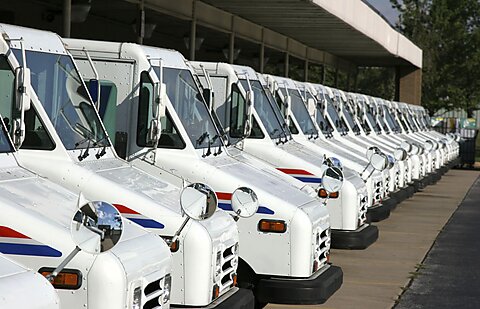
Aside from aiding USPS finances, those reforms would create economic and environmental benefits. Thousands of USPS urban and suburban properties could be put to higher-valued uses in the private sector, and the vast USPS vehicle fleet could be downsized to reduce pollution.
The best reform would be for Congress to privatize the USPS and give company managers the flexibility to make reforms based on cost factors and consumer demands. A private USPS could improve efficiency, pay taxes, and compete on a level playing field with FedEx, UPS, and other firms.
To their credit, USPS leaders have pursued operational efficiencies in areas within their control. The problem has been our geriatric Congress, which seems stuck in the past and fearful of substantial reforms. The new reality is that paper mail no longer binds the nation together; local post offices are less important to communities; and young people have little use for paper mail.
Last week, one committee member at the hearing expressed concern that wedding invitations in her district might not arrive on time. But wedding invitations have been moving online because of the lower costs and greater speed, flexibility, and convenience. Congress needs to recognize that the world has changed. It should downsize the USPS’s cost structure and work with the Trump administration to move mail to the private sector.