




The Iranian regime has allegedly broadcast at least 97 ‘coercive confessions’ from detained protesters on state television in just over two weeks, human rights groups say, as residents endure the longest internet blackout on record.
The videos reportedly feature handcuffed detainees with blurred faces showing remorse for their actions since the protests began Dec. 28, according to a rights group tracking the videos.
It said ominous music can be heard, and edited footage shows attacks on security forces, according to reporting by The Associated Press and data from the Human Rights Activists News Agency (HRANA).
Other rights groups also claim the confession videos are coerced and obtained under duress, with protesters ‘dragged before cameras under the threat of torture and execution.’
‘The regime’s broadcast of so-called confessions by detained protesters is a threadbare and worn tactic,’ Ali Safavi, a senior official with the National Council of Resistance of Iran (NCRI), told Fox News Digital.
‘Time and time again, the henchmen drag arrested demonstrators before cameras under the threat of torture and execution, coercing them to recant their beliefs or invent absurd stories.’
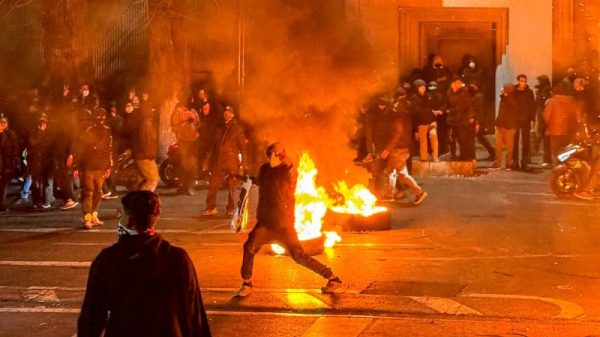
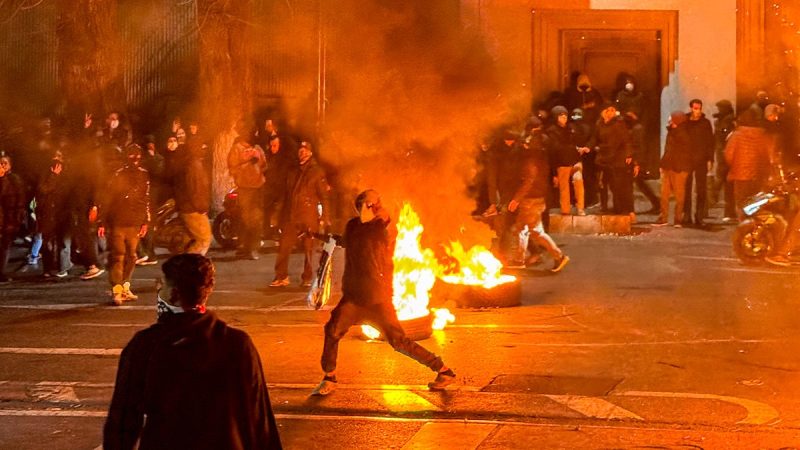
The broadcasts come amid nationwide protests sparked by public anger over political repression, economic collapse and alleged abuses by security forces.
Demonstrations have spread across major cities despite mass arrests, lethal force and sweeping restrictions on communication.
Safavi said the confessions serve a dual purpose.
‘First, they are meant to justify the mass slaughter of protesters, no fewer than 3,000, which NCRI President-elect Maryam Rajavi has stated constitute manifest crimes against humanity,’ he said.
‘These forced confessions are designed to demoralize the Iranian people and sow fear and doubt.’
But he said any mass executions or staged confessions ‘won’t achieve that because no amount of televised coercion or repression will break the protesters’ resolve.’
U.S.-based HRANA has warned that forced confessions in Iran frequently follow psychological or physical torture and can carry severe consequences, including death sentences.
‘These rights violations compound on top of each other and lead to horrific outcomes,’ Skylar Thompson, HRANA group’s deputy director, told The Associated Press, adding that the scale of broadcasts is unprecedented.
The confession campaign coincides with a sweeping internet shutdown that has effectively cut the public off from independent information.
According to NetBlocks, Iran’s internet blackout has surpassed 144 consecutive hours, making it one of the longest disruptions ever recorded.
‘The shutdown is still ongoing, making it one of the longest blackouts on record,’ Isik Mater, NetBlocks’ director of research, told Fox News Digital.
‘State TV continues to operate normally via satellite transmission, which does not depend on the public internet, which means households can still watch Iranian state channels even during a near-total shutdown.’
Mater said the blackout magnifies the impact of state propaganda because ‘while the public is cut off, the state relies on broadcast media and its domestic National Information Network to control what people see,’ he said, likening Iran’s information strategy to that of North Korea.
‘A useful comparison is North Korea where the vast majority of citizens there have little to no access to the global internet, yet the state TV and radio broadcast regime propaganda 24/7,’ he said.
‘Information flows through closed systems, like North Korea’s domestic intranet Kwangmyong and not the open internet.’
Mater added that shutdowns are highly selective, with senior officials and state institutions retaining connectivity through ‘whitelisted networks.’
‘Senior officials and state institutions retain connectivity via whitelisted government networks and private links,’ Mater said.
‘This is why Ali Khamenei and other government officials continue posting on global social media platforms during the blackout, enabling the regime to shape the narrative internationally while citizens are unable to document events or even respond.’